Introduction
Heating a factory or warehouse is not always straightforward. Large open spaces, high ceilings, airflow, and open doors can make conventional heating less effective. While gas heating has long been a common choice for industrial spaces, many businesses are now looking for alternatives that offer better efficiency and more targeted warmth.
Before choosing a replacement, it is important to consider how the space is actually used. In many cases, the best factory heater is not the one that heats the most air, but the one that delivers heat where it is needed most.
Why Businesses Are Looking for Alternatives to Gas Heating
One of the main reasons businesses are exploring alternatives to gas heating is the challenge of efficiency in large industrial spaces. Factories and warehouses are often expensive to heat because of their size, layout, and constant exposure to outside air. Its heating systems may need to work harder for longer just to maintain a basic level of comfort.
Warm air loss is another common issue. In spaces with roller doors, loading bays, or frequent movement between indoor and outdoor areas, heated air can escape quickly. This can reduce the effectiveness of conventional gas systems and increase ongoing running costs.
There is also a growing need for greater control. Many businesses do not need to heat the entire building evenly all day. Instead, they need warmth in specific zones where staff are working. This has led more businesses to look for heating methods that offer better control, faster response times, and more targeted comfort.


Common Challenges of Heating a Factory or Warehouse
Factory and warehouse environments present several challenges that can limit the performance of traditional heating systems. One of the most common is the size of the space. Large open-plan areas are difficult to heat evenly, particularly when there are few internal walls to contain warmth.
Ceiling height is another factor. In high-clearance industrial buildings, warm air naturally rises, which means much of the heat may collect above the occupied area instead of remaining where people are working. This can lead to energy being used without delivering meaningful comfort at floor level.
Airflow also plays a major role. Open doors, ventilation systems, and draughts can all reduce the effectiveness of air-based heating. In some cases, businesses end up paying to heat air that does not stay in the building long enough to provide practical value.
Another challenge is that not all areas of the building require the same level of heating. Workstations, packing lines, dispatch zones, and assembly areas may need warmth, while storage zones or low-traffic areas may not. Heating the entire space in the same way can result in unnecessary energy use.
Is Short-Wave Infrared a Better Alternative to Gas Heating?
For many factories and warehouses, short-wave infrared is worth considering as an alternative to gas heating because it provides direct heat rather than relying on warming the air first. This makes it especially useful in spaces where airflow, draughts, or building height reduce the effectiveness of conventional systems.
One of its main advantages is that it supports localised heating. Instead of heating the entire air volume of a building, short-wave infrared can direct warmth to workstations, production areas, dispatch zones, and other occupied sections where comfort is needed most. In industrial environments, this can be a more practical and energy-efficient solution than full-building temperature control.

Another benefit is instant heat. In all applications, short-wave infrared can provide instant warmth, helping improve comfort without long pre-heating periods. For businesses seeking a practical alternative to gas heating, this approach can often make more sense.
Best Alternatives to Gas Heaters for Factories and Warehouses
For factories and warehouses looking to move away from conventional gas heating, short-wave infrared offers a more practical alternative for large open or hard-to-heat industrial spaces. Depending on the application, different infrared heater configurations may be better suited to different industrial environments.
• Titan Short-Wave Infrared Heater
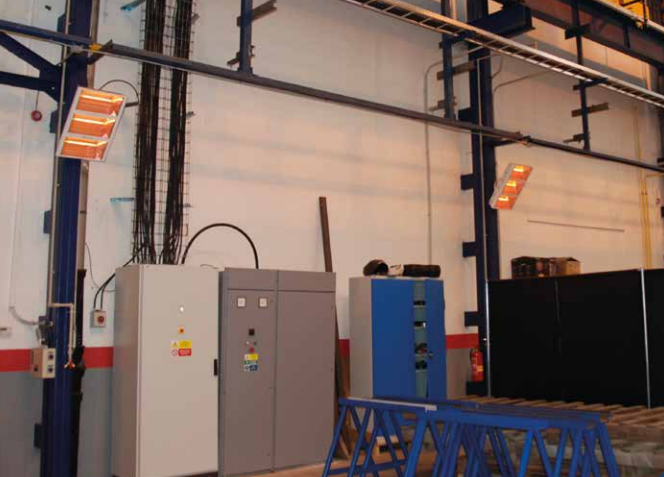
For general factory and warehouse heating, the Helios Titan SP short-wave infrared heater is well suited to open commercial and industrial spaces where localised comfort is more important than heating the entire air volume.
Each heater can cover an area of up to 25 m² and provides instant heat within 1 second, making it ideal for active work zones that need fast, effective warmth. Its high-intensity short-wave radiant heat is supported by a patented parabolic reflector, helping maximise heat output and coverage. The unit also uses replaceable InFraCaLoR® halogen lamps with up to 7,000 hours of life. Titan SP is also comes in 4000W and 6000W configurations useful for higher mounting points or to cover larger areas. Titan SP has an IP25 rating so can be mounted inside or in exposed outside areas.



• Helios Titan Safety Glass Space Heater
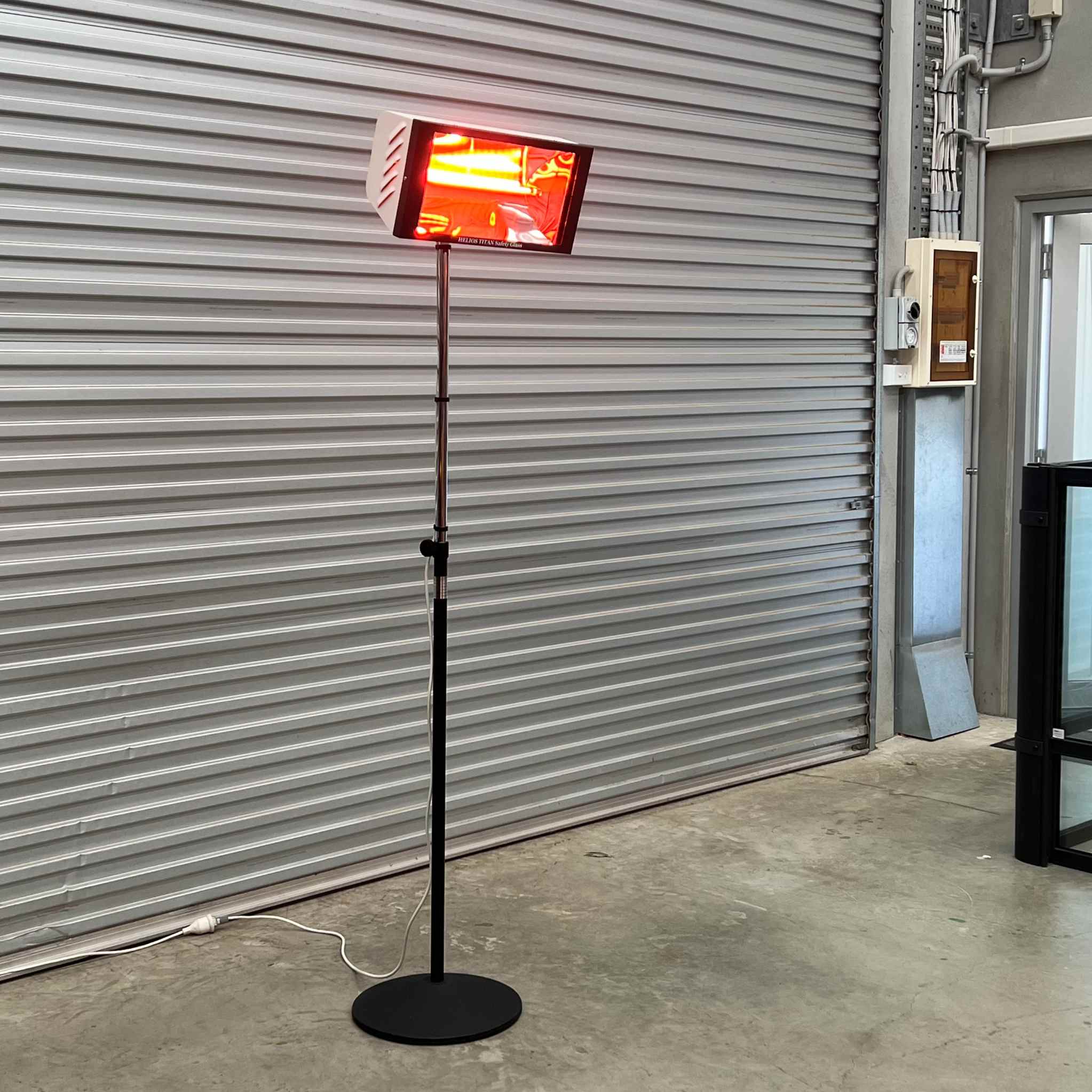
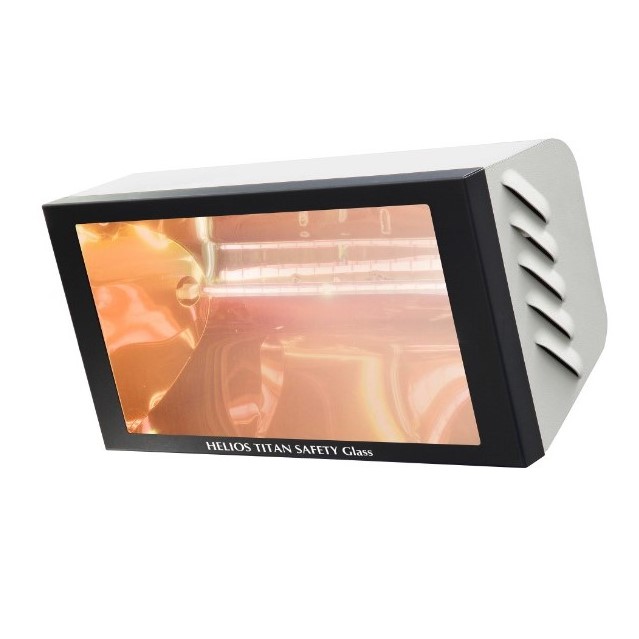
For workplaces where dust or floating particles are a concern, the Helios Titan Safety Glass short-wave infrared heater offers another practical option. This model covers a heated area of up to 10 m² and also provides instant heat within 1 second. Its safety glass design helps protect internal components from dust and particulates. Rated IP23, it is suitable for indoor or outdoor partially exposed installation.


Conclusion
Choosing an alternative to gas heating starts with understanding how the space is used. In many factories and warehouses, the goal is not to heat the entire building, but to keep active work areas comfortable in a more practical and efficient way.
This is why localised heating makes more sense in large industrial spaces. If you’re looking to move away from conventional gas heating, short-wave infrared offers a smarter and highly cost efficient solution for factory and warehouse environments.